
Supported operating systems
INDIGO is a truly multi platform framework. Client applications run on every desktop and mobile system, and the server side runs on Linux and macOS today. INDIGO 3 also builds and runs on Windows and most of the drivers are already ported to it, but the Windows server is not released yet, so for now a server needs Linux or macOS.
The client application, the piece of the software you communicate with, can run virtually on any operating system. For example Ain INDIGO Imager suite, runs on Linux and Windows and CloudMakers INDIGO A1 runs on macOS, iOS and iPadOS and maintain the highest compatibility with INDIGO, but there are also third party clients with full (e.g. APT and PixInsight with an INDIGO plug-in) or limited compatibility (e.g. Ekos). You can also use any ASCOM 6.5+ based software and use it with the so-called ALPACA agent, a bridge between INDIGO and ASCOM/ALPACA.
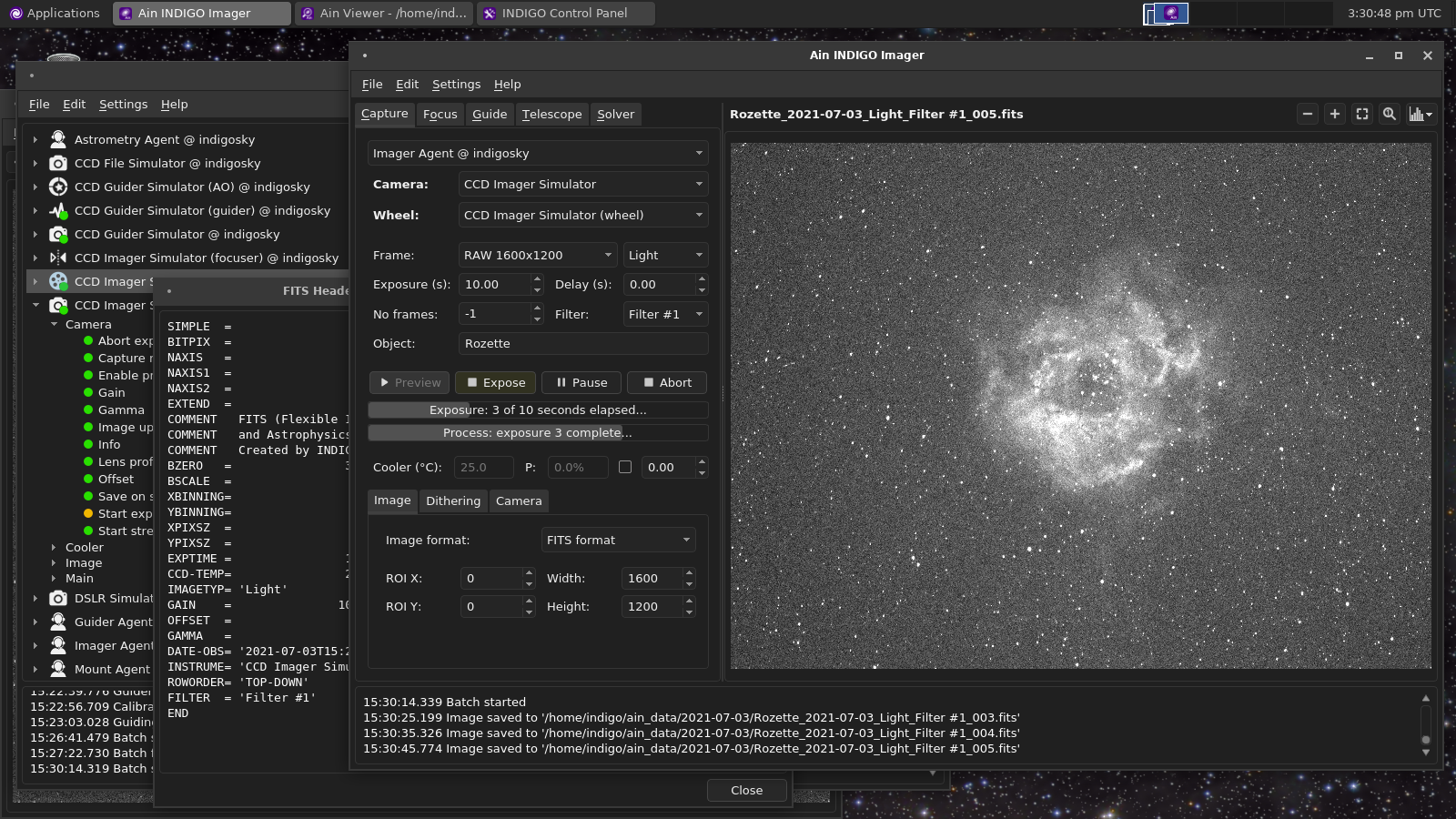
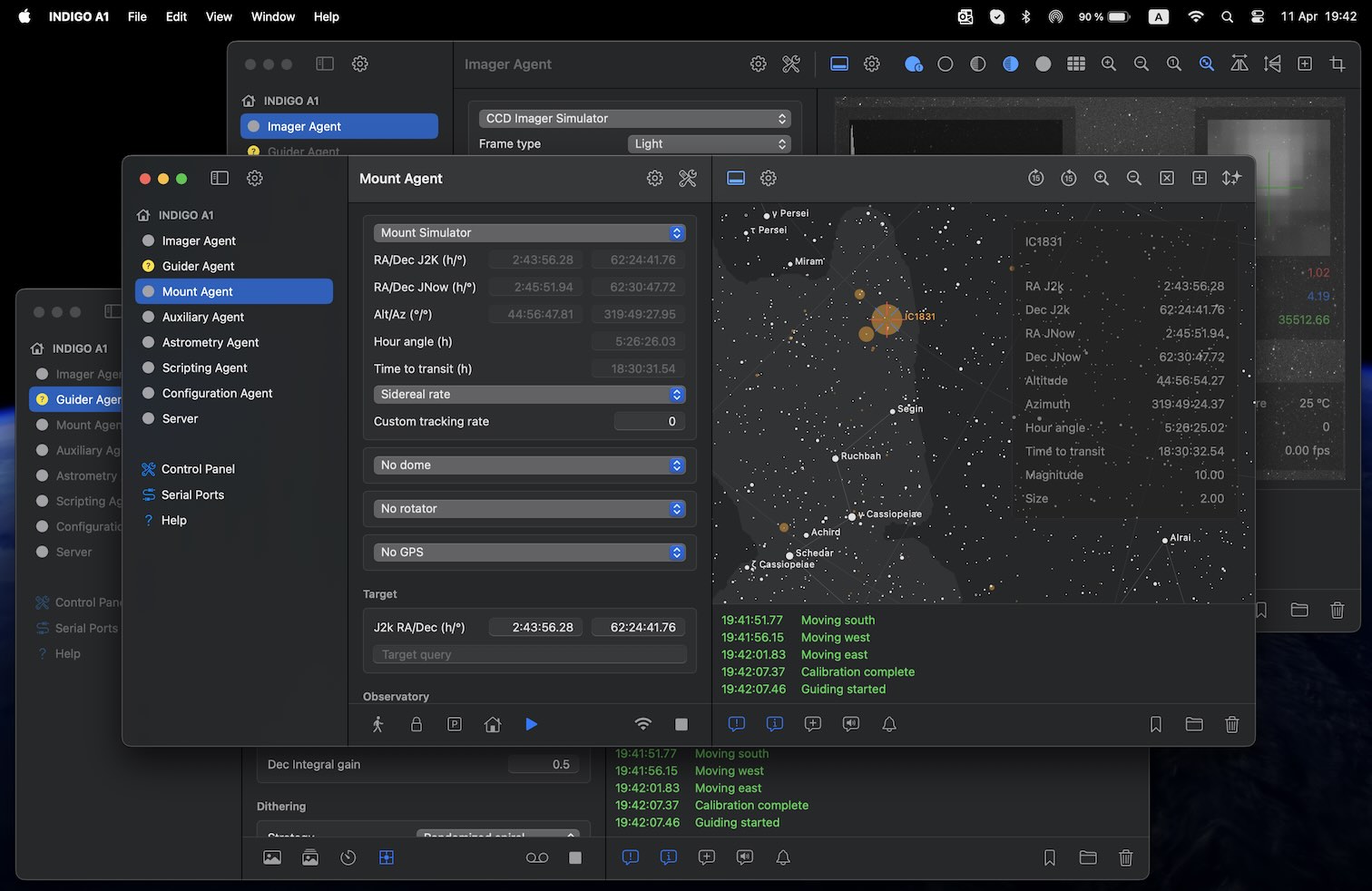
On the other hand the server, the piece of software which communicates with the devices, runs on Linux and macOS for now. The Windows version of the server is coming, and you can follow which drivers are already ported to it in the list of device drivers.
So if both the server and client run on the same machine, you are limited to Linux or macOS until the Windows server is released. If they run on different machines (it is often called a distributed setup) you can use Windows, iOS or iPadOS on the client side today.
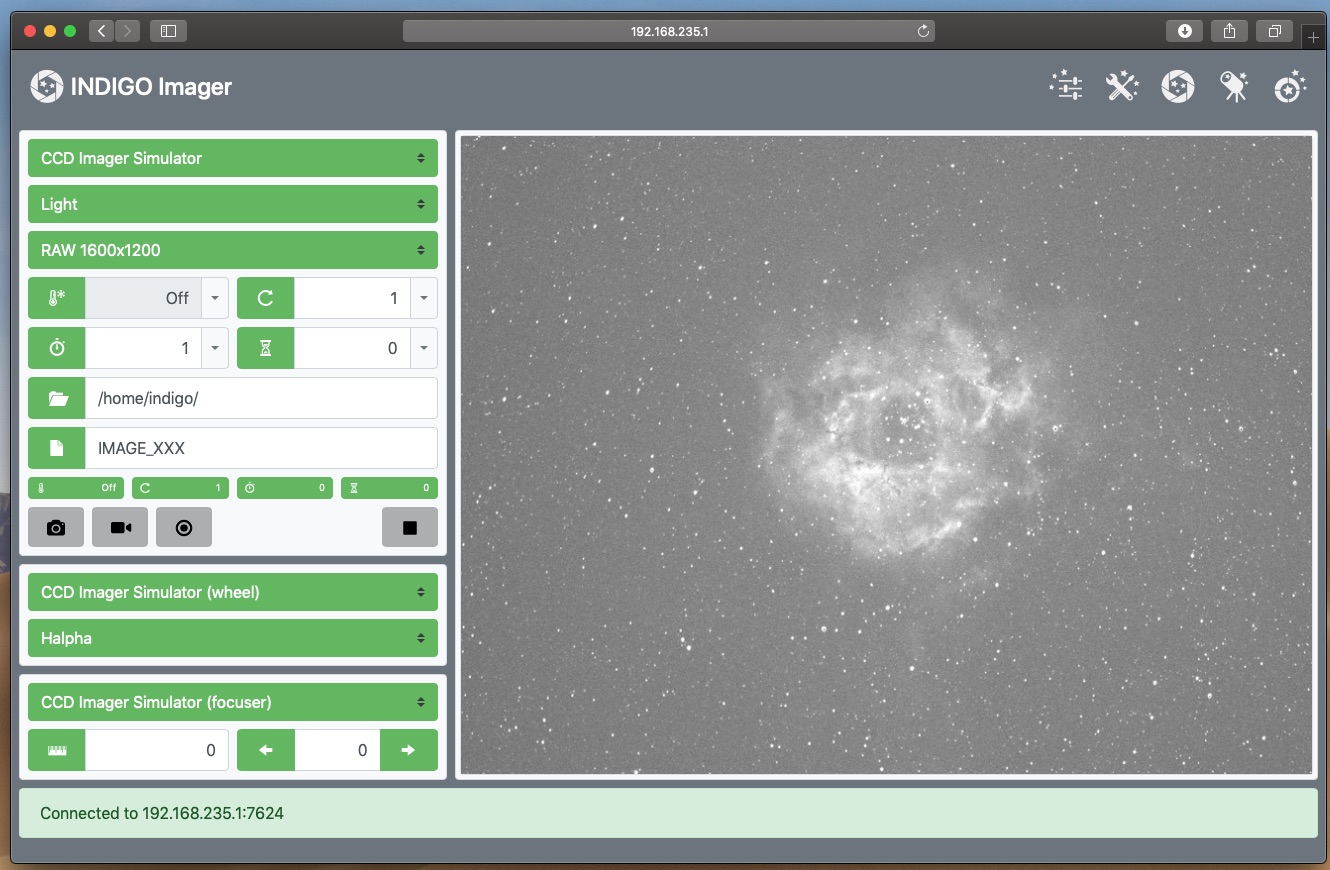
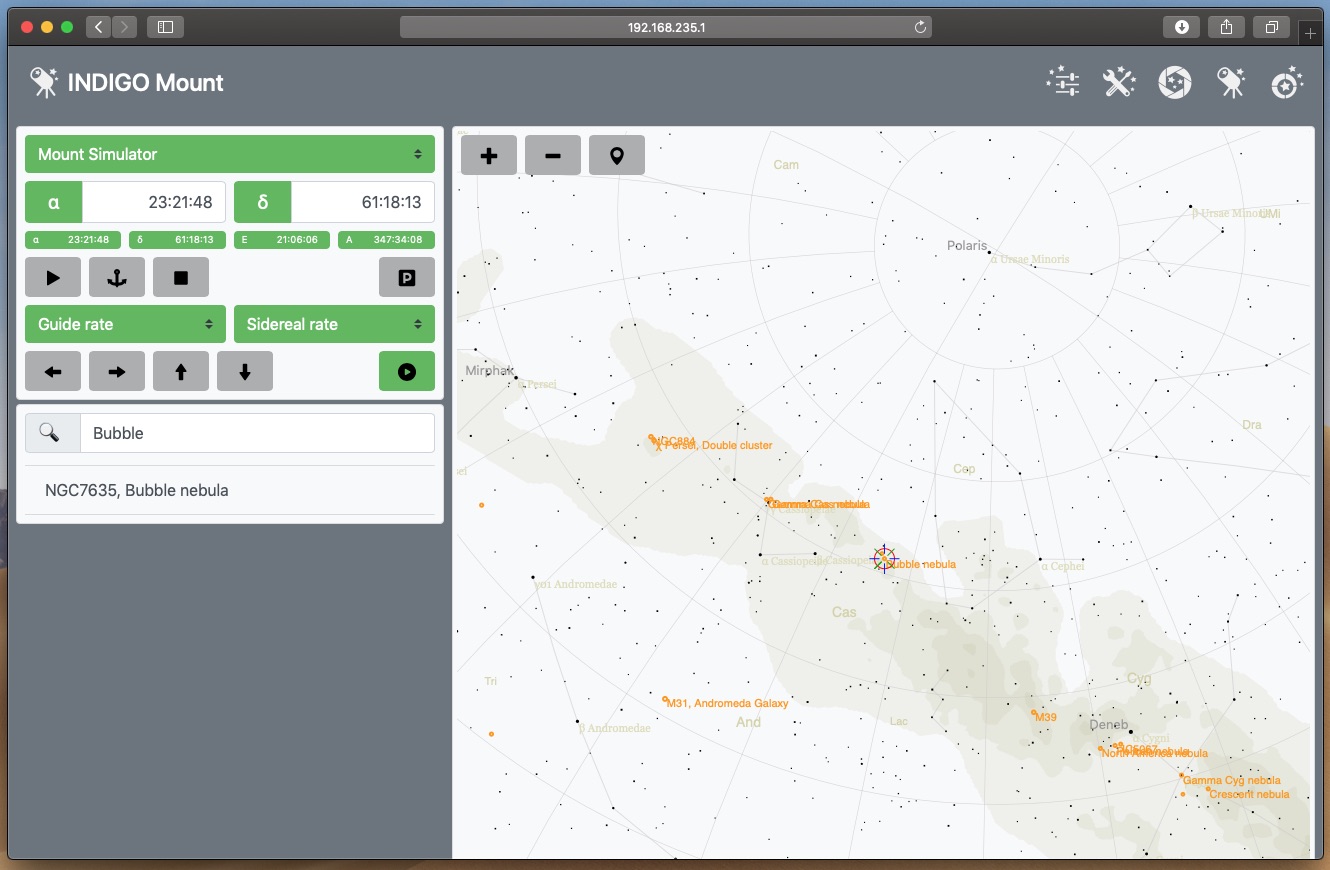
Even if you have only a Windows machine and if you're not a Linux guru, you're not necessarily out of luck. With a tiny and cheap Linux microcomputer like RaspberryPi and INDIGO Sky software prepared for it you can easily build a distributed setup without deeper knowledge. In addition, INDIGO Sky can be used even without true client software. It contains a nearly full featured webGUI which can be used on any computer or mobile device.
Supported hardware
To check if your devices are supported by INDIGO visit Compatible hardware page.
Running INDIGO server
INDIGO can be obtained from our Downloads section.
On Ubuntu / Debian / Raspbian start INDIGO server with the following command:
$ indigo_server indigo_driver1 indigo_driver2 ...
where indigo_driver is a driver name from the list here. More information about indigo_server and INDIGO drivers can be found in Guide to indigo_server and INDIGO Drivers. You can also run indigo agents this way. More information about agents can be found in INDIGO Agents document.
On the other hand Drivers can be loaded, unloaded and configured with GUI tools Like INDIGO Control Panel (available in our downloads section) or through the built in web based Control Panel.
CloudMakers macOS applications have INDIGO server integrated, so no additional actions are needed.
User Documents
The complete documentation is available in the INDIGO documentation index.
Introduction to INDIGO - an overview of INDIGO in PDF
Imaging
INDIGO Imager Agent - Autofocus Tuning Guide - how to tune the autofocus process
INDIGO Imager Agent - Multi-camera Synchronization - imaging with several cameras at once
Saving images from the camera driver - how and where the drivers store the captured images
Guiding
INDIGO Guider Agent - Drift Detection Modes - how the guider detects the drift
INDIGO Guider Agent - Drift Correction Modes - how the detected drift is corrected
INDIGO Guider Agent - Dithering - dithering between the exposures
INDIGO Guider Agent - PI Controller Tuning - tuning the guiding PI controller
INDIGO Guider Agent - Correction Response Tuning - tuning the response to the guiding corrections
Several Guiding Misconceptions Explained - what auto guiding can and can not do for you
Alignment and plate solving
INDIGO Astrometry / ASTAP Agent - Polar Alignment Guide - three point polar alignment step by step
INDIGO Astrometry Agent - Plate Solving Guide - plate solving and telescope synchronization
Documents for both users and developers
Guide to indigo_server and INDIGO Drivers - how to start the server, load and configure drivers
INDIGO Agents - what the agents are and how to use them
INDIGO Scripting Guide - writing scripts for the scripting agent
Basics of INDIGO Scripting - a short introduction to INDIGO scripting
Script based Sequencer - ready to use sequencer built on the scripting agent
INDIGO Property Manipulation in Examples - controlling INDIGO from the command line with indigo_prop_tool
Supported software
If your hardware is compatible with INDIGO, you can choose some free or commercial software for your operating system. Some of them are listed on Compatible software page.